Your stage design should be brand-first, clear, and easy to navigate. Make it modular, content-forward on screens, and inclusive for everyone. This helps fuel your marketing with reusable moments. Let’s further explore the six features that make stage design effective:
1. Brand-First Visuals
More than a backdrop, your stage is integral to your event — strategic design can help create lasting impact. Tie scenic choices to your brand story, theme, and messaging. Your stage design should also promote your broader campaign’s call to action.
Reflect your visual identity while maintaining a simple and cohesive palette. Avoid design elements competing with on-screen content.
2. Clear Sightlines and Flow
Always design your stage from the audience’s perspective. Check views from all seats in the venue, front to back, minimizing obstructions from equipment and set pieces.
Plan presenter pathways with elements like runways or stage inserts. These can boost engagement and create impactful content moments within your event’s flow. For example, a runway allows speakers to walk further into the audience, encouraging interaction.
3. Modular Scenic That Scales
Maximize your stage’s potential with a modular design that can scale easily for different venues and show formats. With a flexible system that can be adapted for awards, panels, demos, and regional stops, you can ensure consistent brand experiences.
Even with a modular structure, you can customize your stage’s appearance with scenic elements to suit your specific event themes, including:
- Branded graphics
- Various materials,
- Dynamic LED lighting
4. Content-Forward Screens
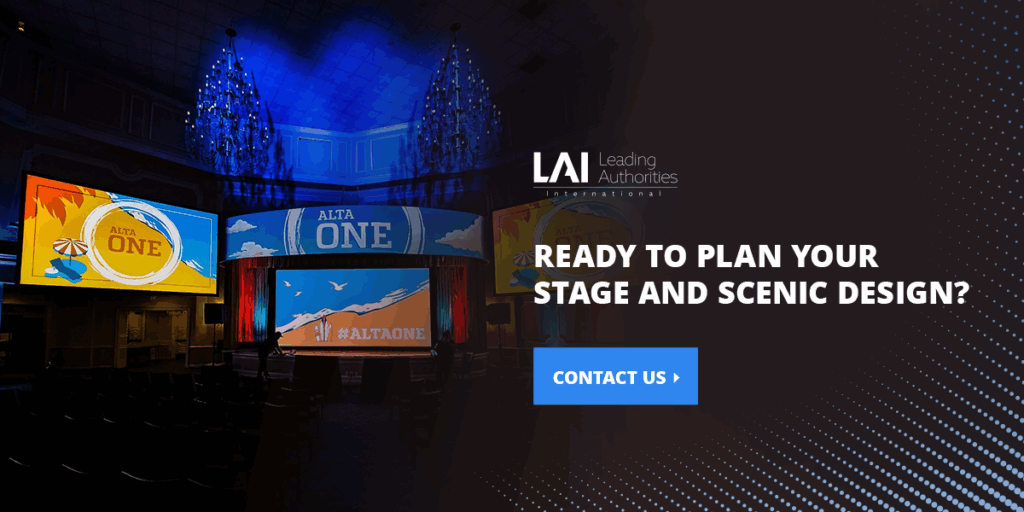
Your stage screens serve as a canvas for storytelling. Use them to display brand moments, event agendas, social prompts, and speaker IDs.
Design graphics for easy reuse in post-event videos, reels, and recruiting clips. You can also use unique screen shapes, such as arches or circles, for speaker headshots, sponsor logos, and projection mapping to enhance your content and visual impact.
5. Accessible and Inclusive Design
Design your stage to meet the ADA Standards for Accessible Design. Ensure wide entry points, clear and unobstructed pathways, and flexible seating for a space that is inclusive. You should also use visible signage and high-contrast screen content with readable typography, making navigation easy for every attendee.
6. Balanced Sponsor Integration
Avoid crowding your stage design with sponsor branding. Instead, integrate it thoughtfully, intentionally, and with frames and placements. Beyond simple logo placements, use scenic elements, lighting, or media backdrops to subtly reflect their visual identity. You should also periodically schedule sponsor content on screens to strike a balance between recognition and narrative flow.
Ready to Plan Your Stage and Scenic Design?
LAI Live is an event production company specializing in scenic and stage design. We craft campaign-led concepts that enhance your message and the event experience for your attendees.
Explore our portfolio, or submit a request for a proposal to get started on planning your stage and scenic design today.