Hybrid event production works by creating a unified experience for both your in-person and online attendees. This means your visuals, stage setup, livestreaming, audience interaction, and content recording all follow a cohesive run of show (ROS). Here’s a closer look at each stage of the process:
1. Plan the Campaign
First, define your campaign’s purpose beyond the event day. Are you recruiting employees, attracting new members, increasing brand awareness, or driving sales? With your goal set, decide on key performance indicators (KPIs) to track your progress. This ensures a measurable definition of success. Your KPIs could include:
- Registrations
- Watch time
- Participation
- Content engagement
Then, map out assets for before, during, and after your event, such as teasers, openers, interstitials, recaps, social cutdowns, and on-demand content.
2. Build the Run of Show
Next, select a hybrid format that fits your campaign. For example, simultaneous events bring together live and virtual audiences, and can be suitable for companies with global teams. The studio experience is another popular format, where speakers present to a small in-person group while broadcasting to a larger online audience — this can be perfect for product launches.
Based on your format, create a ROS that balances virtual interactions with in-person activities:
- Script segments for both audiences, including timing and cues.
- Coach speakers to engage all attendees, avoiding in-room references.
- Ensure visuals are readable on both small and big screens.
3. Sync On-Site and Online
Select an event platform, such as Zoom or Microsoft Teams, that supports livestreaming and features like breakout rooms, chat, and Q&A. You should also dedicate teams to handle both in-person and virtual components, such as moderators to keep both audiences engaged and technical support staff for remote viewers.
Using interactive tools like polling and Q&A, plan interactions across both virtual and physical spaces. Both audiences should be able to contribute equally.
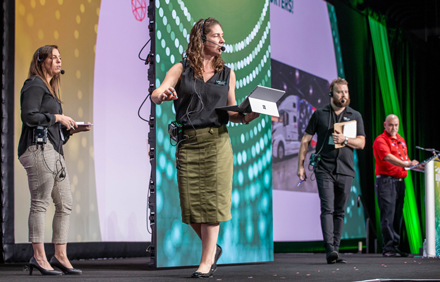
Crisp and clear audio and video (AV) are paramount. Use multiple cameras, a robust video engineering system, and high-quality audio to ensure full engagement with virtual attendees.
4. Capture and Repurpose
Beyond recording full sessions, you should also capture presentation soundbites, slides, data, photos, behind-the-scenes footage, attendee feedback, polls, and Q&A interactions.
Repurpose this content into various formats to help fuel marketing and maximize your return on investment. Post-event campaign formats can include:
- Recaps
- Shorts
- Infographics
- In-depth blog posts
- Downloadable slide decks
- Gated on-demand webinars
Produce Your Hybrid Event With LAI Live
To ensure a seamless hybrid event, align your creative, AV, staging, and streaming elements by partnering with a professional production company. LAI Live specializes in hybrid events nationwide. We offer comprehensive event production services, from planning and content design to AV logistics and event technology solutions. Our focus is on creating unique, stress-free, and unforgettable audience experiences for organizations of all sizes.
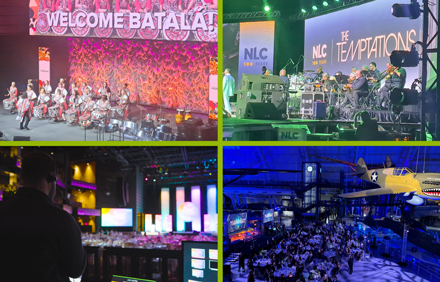
Explore our portfolio or contact us today to discuss your next event.