Key Takeaways
• The most effective live events start with a clear audience and business objective, then align content, design, technology, and logistics around it.
• Plan the attendee journey from the first invitation through the final follow-up, including the moments that should feel useful, surprising, or memorable.
• Experienced production guidance helps teams turn a strong idea into an organized, engaging, and measurable event.
In an age of algorithm-shaped news, AI-generated content, and shrinking attention spans, many associations and non-profits find it harder than ever to communicate with clarity and with control. Digital rewards speed and volume, not accuracy or nuance. Audiences are right to question what is real, what is edited, and what is manufactured.
Against this backdrop, live events are emerging as the last reliable, trustworthy channel of communication. For many organizations, events represent one of the only communications channels they still fully control. This owned media, built in their vision and delivered to their audience on their terms, is a powerful asset in a world of skepticism.
Be in the Room Where It happens
While digital fatigue grows and AI-generated noise accelerates, in-person events offer something no technology can replicate: Presence. Authenticity and trust increase when people can see one another and read body language and confirm intent. And, serendipity! Hallway chats, shared meals, and informal conversations often create the most valuable insights and partnerships. For associations and nonprofits, these elements form the core of their community value proposition.
The Milli Vanilli and Tilly Norwood Effect: Make it Un-fakable
Even leading business thinkers see what is coming. In June 2025, Mark Cuban wrote:
“Within the next 3 years, there will be so much AI, in particular AI video, people won’t know if what they see or hear is real. Which will lead to an explosion of f2f engagement, events and jobs.”
Real places with real people put live events at the center of communication strategy. The value of human experience increases. Skift Meetings named events as the antidote to AI slop as the top meetings industry trend for 2026, highlighting that as content becomes more synthetic and more suspect, people increasingly seek out interactions that are un-fakable, un-generated, and unmistakably human.
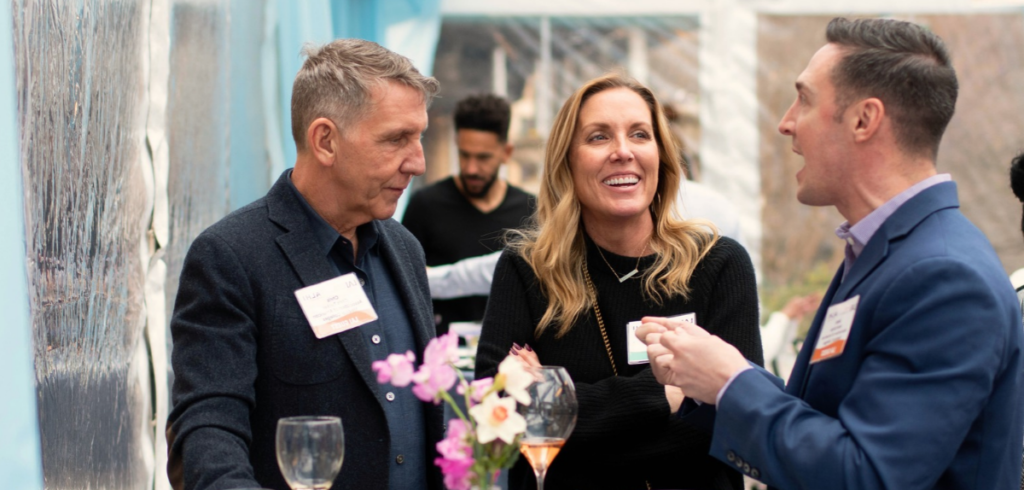
It is just as important to think about the full event campus when designing for realness and human experience. Trends continue to point toward the value of spaces outside traditional meeting rooms, where attendees are more relaxed, more open, and more willing to connect. These areas are rich with opportunities for engagement, sponsor activation, networking, and authentic conversation that cannot be replicated online.
• Immersive Problem Rooms. Create a space for solving an industry-specific challenge, debate a policy issue with facilitators, or co-create a community initiative that meets a pressing need.
• Human Libraries. In a coffee house atmosphere, have attendees and subject mater experts volunteer as “books.” Other attendees can “check them out” for a 10-15 minute content conversation or advice.
• Documentary Booths. In the style of NPR StoryCorps, host a recording area for attendees to share stories, reflect on challenges or submit questions and ideas. This creates a trove of user generated content to inform future projects.
• Outdoor Guided Networking. Get steps and unleash creativity! Use a facilitator to host small group walks of 15-20 people and provide prompts for discussion to pairs. Rotate pairs every 5 minutes.
These moments resonate because they are immediate, imperfect, and human. They deepen trust and emphasize the irreplaceable value of real-time, in-person communication.
In a world filled with synthetic and suspect content and digital clutter, offer what people trust most: 3-D, real human interaction. For mission-driven and membership organizations, investing in stronger, more intentional events is becoming not just worthwhile, but essential.